
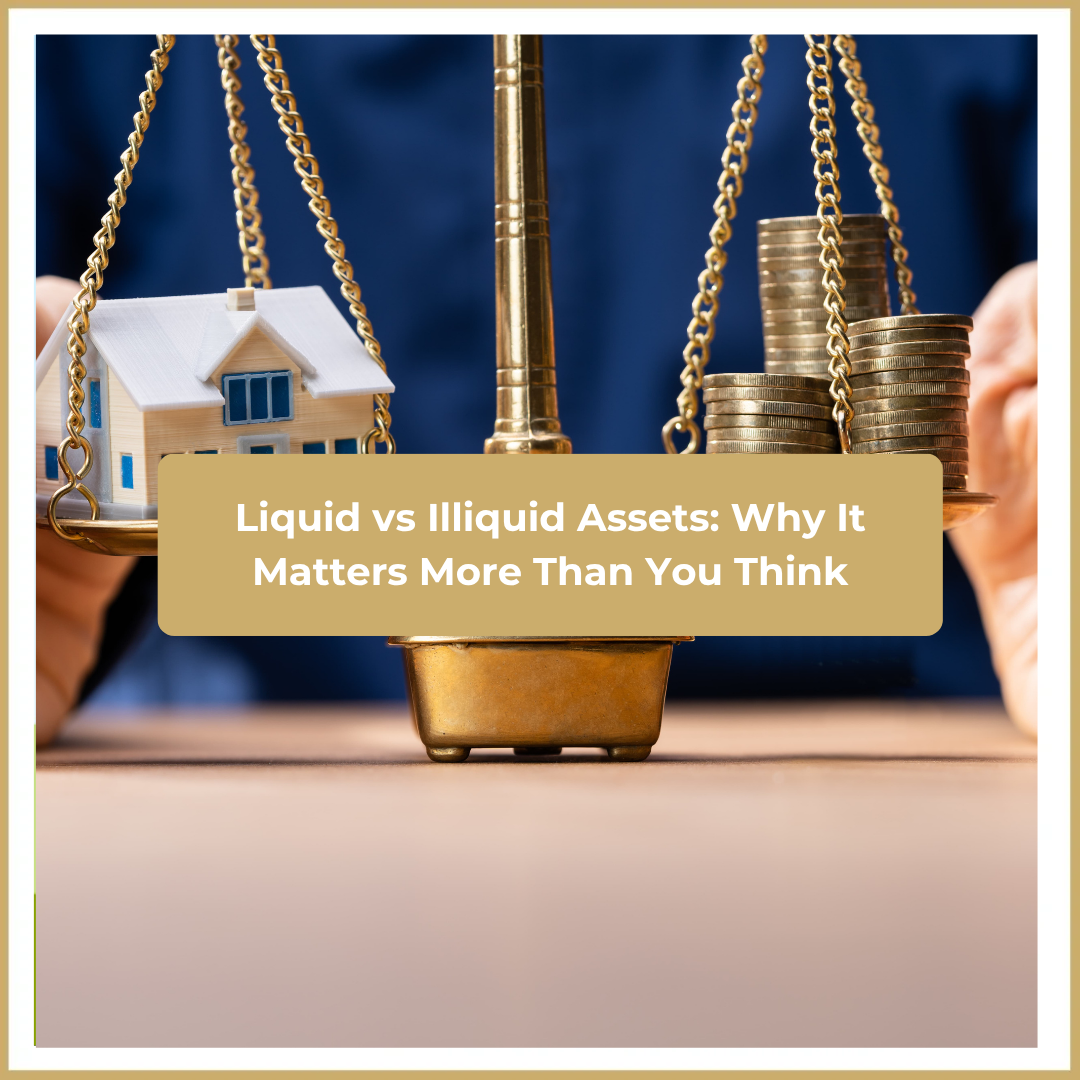
When it comes to building wealth, most people focus on return potential or tax efficiency. But one key factor that often gets overlooked is liquidity—or how easily you can access your money when you need it.
For Australian investors, understanding the difference between liquid and illiquid assets is critical to ensuring your portfolio supports your lifestyle, cash flow needs, and long-term goals.
What Are Liquid Assets?
Liquid assets are investments that can be quickly converted into cash without significant loss of value. These include:
- Cash or cash equivalents
- Shares and ETFs
- Government bonds
- Managed funds (with daily liquidity)
Because these assets are easily accessible, they’re ideal for emergencies, short-term needs, and opportunities that require quick capital.
Pros:
- Easy to access in a financial emergency
- Can help fund short-term goals or purchases
- Allows for quick portfolio rebalancing
Cons:
- Often come with more market volatility
- Potentially lower long-term returns
Can encourage reactive decision-making if not planned carefully

What Are Illiquid Assets?
Illiquid assets are investments that can’t be sold quickly without incurring a loss or taking time. Examples include:
- Direct property (residential or commercial)
- Private equity
- Infrastructure projects
- Collectibles or antiques
These often require a longer timeframe to sell and may involve legal or administrative hurdles.
Pros:
- Potentially higher returns over time
- Often less volatile than liquid investments
- Can diversify your portfolio with tangible assets
- Property, in particular, offers the potential for income through rent and capital growth over time
Cons:
- Harder to access funds in an emergency
- Can’t be easily rebalanced in a portfolio
Selling process can be costly and time-consuming

Why Holding Some Illiquid Assets Can Be a Good Thing
Illiquid assets often get a bad rap for being inaccessible—but in the right context, they can be powerful tools for long-term wealth building.
Property, for example, is one of the most common illiquid assets Australians hold. While it can’t be sold overnight, it often offers:
- Stable income from rent
- Capital growth over a long period
- Tax benefits through negative gearing and depreciation
- Forced discipline—because you can’t easily sell, you stay the course and avoid emotional decisions
For strategic wealth builders, business owners, and retirees alike, a blend of liquid and illiquid assets ensures you’re not only earning returns—but also protected against the unexpected.
The Balance You Need
Too much liquidity may mean your money isn’t working as hard as it could. Too little, and you could be forced to sell something at the wrong time just to meet cash needs.
That’s why at CFV Advisory, we always ask: “How quickly do you need your money to work for you—and how quickly might you need to access it?”
We help clients create portfolios that:
- Reflect their lifestyle and business needs
- Anticipate future spending events
- Match investment choices to cash flow goals
What Happens When You Don’t Understand Liquidity?
Many investors unknowingly trap their wealth in assets they can’t touch when needed. This becomes especially problematic during:
- Market downturns when you need buffer capital
- Emergencies or health-related costs
- Retirement drawdown years
On the other hand, sitting on too much cash or only liquid assets could mean missing out on the compounding growth potential of long-term investments.

Our Role at CFV Advisory
At CFV Advisory, led by Victor Idoko—CFA, CFP®, and holder of a Master’s in Finance—we guide clients through smart asset allocation strategies that align with real-life goals.
Whether you’re looking to:
- Fund future business expansion
- Retire comfortably
- Buy your next investment property
—we’ll help you decide what level of liquidity you need and ensure your portfolio reflects it.
This is a core part of how we build wealth with our clients—not just by focusing on returns, but by designing portfolios that work with their lives, not against them.
Final Thought
Liquidity isn’t just a technical finance term. It’s a personal, practical concept that affects how you feel about your money every day. And understanding it is key to building a portfolio that serves you.
Need help getting it right?
📞 Book a Discovery Call
📩 Or email us at operations@cfvadvisory.com.au
We’ll help you strike the right balance—so your wealth works hard and stays within reach.
Helpful Resources:
- CFS: Understanding Investment Risk
- Business Insider: What Are Liquid Assets
- Crystal Funds: Liquid vs Illiquid Assets
Any discussion in this article does not take into account your objectives, financial situation or needs. Before acting on it, you should consider whether it’s appropriate to you, in light of your objectives, financial situation or needs